Hermann Nitsch (1938-2022) was the high priest of total action, the director of an art that goes beyond painting to become a sacrificial experience, a Dionysian celebration, an exploration of flesh and matter in their most primordial meaning. Founder of the Orgien Mysterien Theater, he built a universe in which the artistic gesture merges with the ritual, in which blood and color, music and pain, life and death merge into a single existential act.
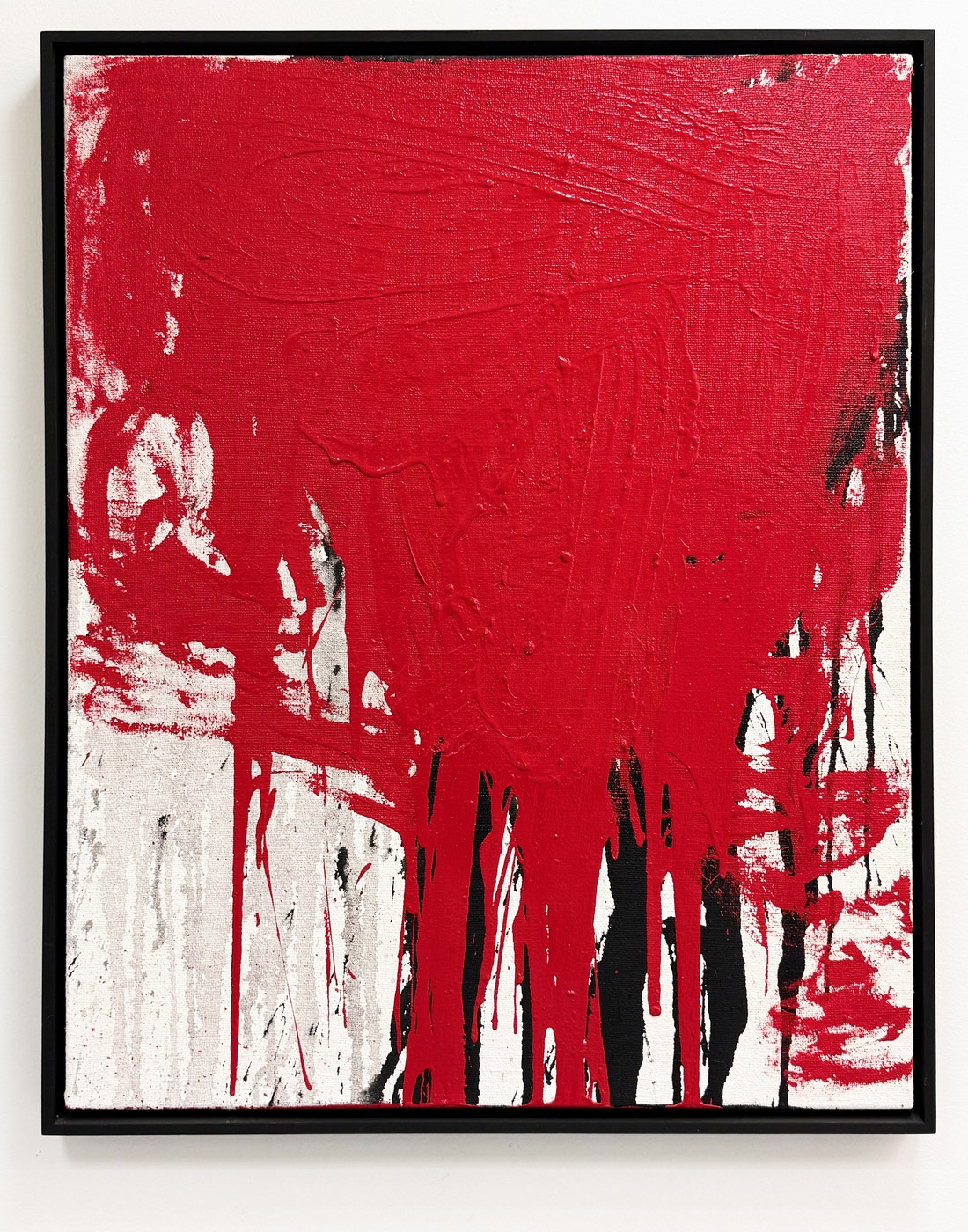
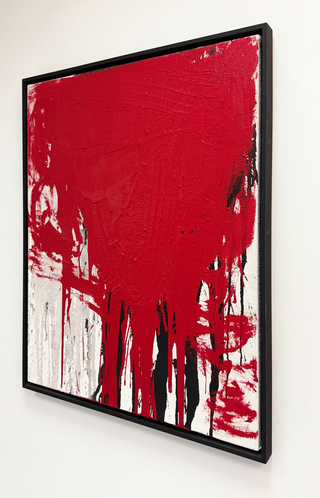
Trained in Vienna, in the post-war climate that saw the emergence of Viennese Actionism as a radical response to the trauma of history, Nitsch makes painting a sensorial battlefield, a place of collision between body and canvas, between violence and creation. His Schüttbilder (poured paintings), dense with color thrown with primitive fury, are the visual residue of cathartic actions, the document of an art that is not contemplated but lived, that does not limit itself to representing the sacred but activates it, makes it tangible through flesh and sacrifice.
But painting, in Nitsch, is never separated from action. The canvases, soaked in blood red, are the result of performative processes that draw on Greek tragedy, Christian liturgy, and archaic cults. The slaughtered animals, the exposed viscera, the naked bodies immersed in color are elements of a ritual theater that wants to reconnect man to his deepest roots, beyond the repression of society, beyond bourgeois morality.
Yet, beyond the provocation, Nitsch’s work is a hymn to life, an exaltation of pleasure and ecstasy. His painting is living flesh, a wound that pulsates on the canvas, a chromatic altar where red becomes blood and wine, white shroud and light, yellow and blue echoes of a possible transcendence. A total work, in which art is never separated from life, but becomes its culmination, its scream, its most extreme celebration.
Hermann Nitsch (1938-2022) was the high priest of total action, the director of an art that goes beyond painting to become a sacrificial experience, a Dionysian celebration, an exploration of flesh and matter in their most primordial meaning. Founder of the Orgien Mysterien Theater, he built a universe in which the artistic gesture merges with the ritual, in which blood and color, music and pain, life and death merge into a single existential act.
Trained in Vienna, in the post-war climate that saw the emergence of Viennese Actionism as a radical response to the trauma of history, Nitsch makes painting a sensorial battlefield, a place of collision between body and canvas, between violence and creation. His Schüttbilder (poured paintings), dense with color thrown with primitive fury, are the visual residue of cathartic actions, the document of an art that is not contemplated but lived, that does not limit itself to representing the sacred but activates it, makes it tangible through flesh and sacrifice.
But painting, in Nitsch, is never separated from action. The canvases, soaked in blood red, are the result of performative processes that draw on Greek tragedy, Christian liturgy, and archaic cults. The slaughtered animals, the exposed viscera, the naked bodies immersed in color are elements of a ritual theater that wants to reconnect man to his deepest roots, beyond the repression of society, beyond bourgeois morality.
Yet, beyond the provocation, Nitsch’s work is a hymn to life, an exaltation of pleasure and ecstasy. His painting is living flesh, a wound that pulsates on the canvas, a chromatic altar where red becomes blood and wine, white shroud and light, yellow and blue echoes of a possible transcendence. A total work, in which art is never separated from life, but becomes its culmination, its scream, its most extreme celebration.




Contatti
info@officinebit.ch